What I Wish I Knew Before My First Trip to the Philippines
What my first Philippines trip taught me about getting around, carrying cash, packing less, flight delays, and leaving room for the unexpected.
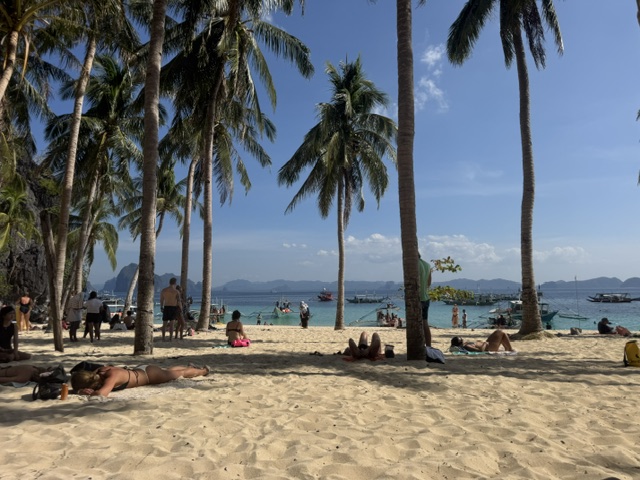
Before my first trip to the Philippines, I did what I usually do.
I researched the hell out of it.
Flights, transportation, money, where to stay, what to bring, what not to bring, how much things cost, how to get around, what areas were safe, what I should expect in Manila, what the province would be like.
I wanted to have a pretty good idea of what I was walking into before I ever got on the plane.
And honestly, a lot of that research helped.
But there are some things that you just don’t fully understand until you get there.
Some of them are simple. Some can save you money or headaches. Some are just things I would have done differently if I could rewind to that first trip.
This isn’t supposed to be the ultimate guide to the Philippines.
It’s just what I wish somebody had told me before I went.
Grab Makes Transportation Easy in the Cities
Grab is basically the Uber equivalent in the Philippines, and if you're in an urban area, it makes getting around pretty simple.
I used it in Manila and had no issues.
The biggest advantage is that you can see the fare before you get in, the ride is tracked through the app, and the driver is attached to the platform. That removes a lot of the uncertainty you might otherwise have when getting into a random vehicle in a country you don't know.
Transportation in general is also extremely affordable compared to the United States.
Even in Manila, I never really felt like transportation was eating into my budget.
Where things change is once you get out into the province.
Grab isn't going to be your answer everywhere.
In places like Bohol, you're more likely to see tricycles, buses, vans or rental cars depending on where you're going.
When I traveled to Ubay, I rented a car and found it very easy to get around that way.
If you're traveling a longer distance and don't have a rental, you're probably looking at taking a bus or some other form of provincial transportation.
One thing I personally avoid is taxis.
I've had taxi drivers in Manila stop me and try to convince me to take a ride when I was literally close enough to see the building I was walking toward.
That doesn't mean every taxi driver is a bad actor.
It just means I trust Grab more.
I can see the price. The ride is tracked. The driver is attached to an account. If something goes wrong, there's a record of the trip.
That makes me a lot more comfortable.
Keep Cash on You, Especially Outside the Tourist Areas
On my first trip, I brought about $400 in cash with me and exchanged it into pesos at Newport Mall.
I specifically asked for part of it in larger bills and part of it in smaller bills.
That ended up being a good decision.
A lot of places accept cards, and I rarely had trouble using one in larger businesses, malls, hotels or tourist areas.
But once you start getting into smaller businesses, sari sari stores, smaller restaurants or places in the province, cash becomes a lot more important.
Some places also accept GCash, but as a visitor, cash is still the safest thing to have available.
The other reason I wanted smaller bills was simple.
You don't want to buy something inexpensive in the province and hand someone a large bill they can't easily break.
There are ATMs around, but if you're going somewhere more remote, I wouldn't rely on finding one exactly when you need it.
I would rather have enough cash to cover the time I'm going to be away from larger towns and then replenish it when I'm somewhere with better access.
You don't need to walk around with your whole travel budget in your pocket.
But you should have cash.
Moving Around the Philippines Takes More Time Than You Think
On my first trip, I moved around quite a bit.
I spent about two weeks in the Philippines, splitting most of that time between Bohol and El Nido. Manila was mainly a stop along the way.
I don't regret it.
El Nido was absolutely worth adding, and I would do it again.
What surprised me more was how much time you lose to travel days.
Airports eat up more of your day than you think.
Getting there. Checking in. Waiting. Flying. Getting your luggage. Leaving the airport. Getting transportation on the other side.
You can easily lose half a day just moving from one place to another.
And delays happen.
I've had an eight hour delay in El Nido.
I've also had delays in Manila that eventually caused me to miss a connecting flight in the United States.
So my mindset now is pretty simple.
Expect the unexpected.
I wouldn't necessarily change how much time I spent in any one place.
What I would avoid is constantly running from island to island just because you feel like you need to see everything.
You don't.
The islands are going to be there.
Give yourself enough time to actually settle into a place and enjoy it.
Everything Moves Slower
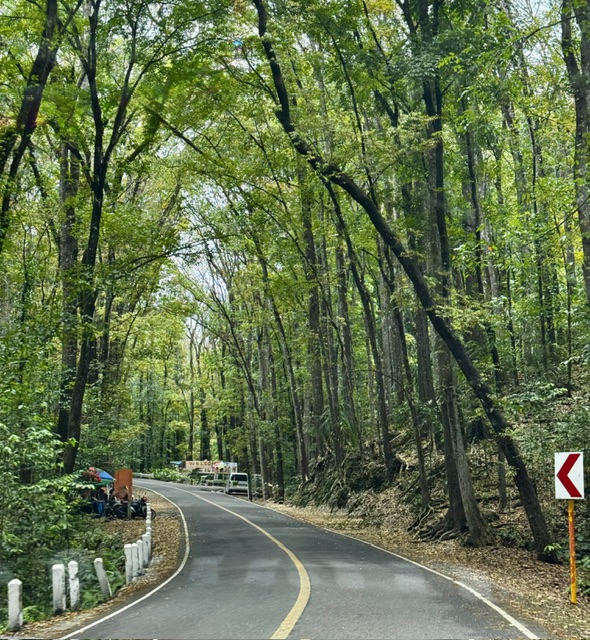
This is something Americans should probably prepare themselves for.
Travel time can feel completely different in the Philippines.
A drive that feels like it should take 30 minutes based on distance can take hours.
Twenty miles per hour can feel completely normal depending on where you are.
Traffic, road conditions, tricycles, motorcycles, pedestrians and the general pace of traffic all slow things down.
And this isn't just Manila.
Driving can be slow in Tagbilaran, Ubay and plenty of other places too.
If you're coming from the United States and you're used to jumping on an interstate and covering a lot of distance quickly, you need to adjust your expectations.
Distance on a map does not always translate into the travel time you think it will.
Manila Was More Familiar Than I Expected
Manila surprised me, but probably in the opposite way that people would expect.
Where I stayed, it felt much more familiar to the United States than I thought it would.
The streets were clean.
English was everywhere.
People spoke English.
There were large malls, modern buildings, restaurants and all the amenities you would expect from a major city.
It didn't feel foreign in the way I had built it up in my head.
The province was different.
That felt much more like the Philippines I had pictured.
Slower pace. Fewer amenities. Smaller businesses. More local transportation.
But even then, it wasn't exactly like the pictures online.
That's one thing worth remembering.
The Philippines isn't one thing.
Manila is not Bohol.
Panglao is not Ubay.
El Nido isn't any of them.
Someone can tell you what the Philippines is like, but their experience may be completely different depending on where they actually spent their time.
The Heat Wasn't as Extreme as I Expected
Before I went, I read plenty of people talking about how brutally hot the Philippines was.
And yes, it's hot.
Very hot.
But I come from a hot and humid region in the United States, so for me it wasn't some completely different level of heat.
It felt pretty comparable to what I already knew.
The main thing is to be smart about it.
Do your outside activities in the morning or later in the day.
During the hottest part of the afternoon, go inside.
Drink water.
Wear light clothes.
Don't turn your vacation into some endurance test where you're walking around in direct sun at 2 p.m. just because that's what your itinerary says you're supposed to be doing.
My Plans Lasted About Five Minutes
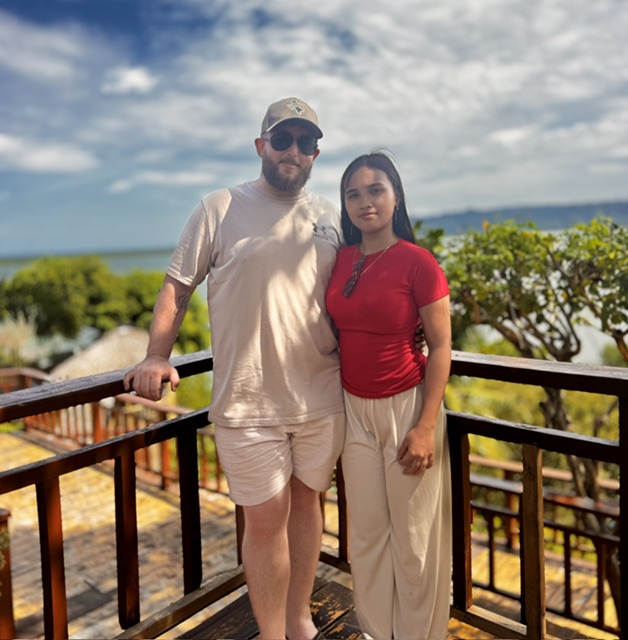
I am a planner.
I research everything.
I build timelines.
I like knowing where I'm going and what I'm doing.
Then I got to the Philippines and pretty much started changing the plan.
Not because anything went wrong.
I was there with my girl, and I realized pretty quickly that people can experience a place differently.
Things that looked important to me while planning from the United States didn't always feel as important once I was actually there.
Sometimes she had a better idea.
Sometimes something else sounded better that day.
Sometimes we just didn't feel like doing what I had originally planned.
So I started going with the flow.
I still kept the things that had rigid timelines.
Flights still leave when they leave.
Reservations are still reservations.
But the rest became flexible.
If something felt more natural, we did that instead.
And I honestly don't feel like I missed anything.
That was probably one of the better lessons from the trip.
Make a plan.
Just don't become a slave to it.
I Packed Way Too Much
I completely filled my luggage and backpack on my first trip.
Part of that was pasalubong.
I brought snacks and things from the United States that were either difficult to find there or things I specifically wanted to bring for people.
So not all of that space was wasted.
But I definitely brought too much.
After that trip, I started carrying fewer clothes.
Eventually I got to the point where now I can travel with basically a backpack.
You don't need your whole life with you.
Most places with a decent population have what you need if you forget something.
And laundry is easy.
In Bohol, I had someone wash all of my clothes for around 100 pesos and got them back the same day.
Tourist areas may charge more, but compared to the United States, services like that are still extremely affordable.
That's one of the things I really like about the Philippines.
Things that would feel like a luxury service back home can be inexpensive enough that there's no reason not to use them.
The one thing I was glad I packed was an umbrella.
Other than that, my advice now is simple.
Bring enough clothes for a few days.
Wash them.
Travel light.
You'll enjoy moving around a lot more when you're not dragging half your house behind you.
Build More Buffer Into Your Flights
This is one of the few things I have actually changed because of my experiences there.
Delays happen.
I've had enough of them now that I don't like tight connections.
If all of your flights are on the same itinerary, you have more protection because the airline can usually reconnect you if their delay causes you to miss another flight.
It gets more complicated when you've booked separate tickets.
For example, maybe I'm flying from Tagbilaran to Manila on Cebu Pacific, but then leaving Manila internationally on Philippine Airlines or United.
Those are completely separate tickets.
If the Cebu Pacific flight is late and I miss the international flight, the second airline may have absolutely no obligation to help me.
That's your problem.
So now, when I'm dealing with separate itineraries, I give myself a much larger buffer.
I'd rather sit at the airport for an extra hour or two than watch an international flight leave without me.
I also make sure that financially I can absorb something going wrong.
A hotel.
A new flight.
Food.
Transportation.
Whatever.
Travel doesn't always follow the plan.
Having enough money and enough time to deal with a problem makes those situations annoying instead of catastrophic.
What I'd Tell Someone Going for the First Time
If one of my friends told me tomorrow that he was flying to the Philippines for the first time, I wouldn't hand him some giant checklist.
I'd tell him to have a basic plan and then relax.
Use Grab in the cities.
Keep some cash on you.
Carry smaller bills if you're going into the province.
Don't assume a short distance means a short drive.
Give yourself more time than you think you need when you're flying.
Don't pack your entire closet.
And don't try to see the whole country in one trip.
More importantly, don't spend so much time trying to execute the perfect vacation that you forget to actually experience where you are.
I researched the Philippines constantly before I went.
I'm glad I did.
But some things you only learn once you're standing there.
And honestly, that's part of the fun.
I still plan my trips.
I still research the hell out of them.
I'm just a lot more willing now to leave some empty space and see what happens.
That might be the biggest thing I learned from the first one.